The useful question is not "Can general dentists place implants?" The useful question is whether your training gives you enough supervised repetitions, case-selection judgment, and support to start with appropriate cases in your own practice.
An implant placement course for general dentists should change what you can do on Monday — not only what you can print for your CE folder. This guide is a vendor-neutral evaluation framework for dentists comparing placement-focused CE: prerequisites, surgical reps, mentor ratio, case selection, accreditation, cost, and transfer back into practice. After the criteria, it maps one concrete live-patient example — the 3rdSET implant placement course — so you can see how published numbers look against the checklist.
If you are still choosing between lecture, typodont, cadaver, mini-residency, and live-patient formats, start with how to choose a dental implant training program. If you already know you want supervised surgery, pair this article with live-patient implant training for general dentists and the scoring checklist in 9 ways to evaluate dental implant CE programs.
What a general dentist needs from an implant placement course
General dentists comparing implant placement courses should look past the certificate first. The certificate matters for records. The transfer to practice comes from repetition, correction, and judgment under supervision.
A strong course helps you answer four practical questions before you leave:
- Which cases are appropriate for my current skill level?
- Where should the implant sit relative to the final restoration?
- What anatomy, tissue, and bone-quality details change the plan mid-procedure?
- When should I graft, delay, refer, or ask for help?
If a course cannot help you answer those questions with real cases in front of you, it is unlikely to change your referral pattern. Inspiration is cheap. Supervised decision-making is the scarce resource.
Prerequisites: beginner-friendly still means a foundation
Beginner-friendly does not mean no clinical foundation. A hands-on implant placement course for general dentists should expect:
- An active dental license.
- Comfort performing extractions.
- Enough surgical discipline to follow sterile protocols.
- Willingness to accept chairside correction without ego.
Programs that skip prerequisites to fill seats create mismatched cohorts: advanced doctors bored by basics, beginners overwhelmed by anatomy they cannot yet manage. Honest screening protects patients and participants.
Many intensive live-patient placement courses welcome first-timers when those fundamentals are present. In the 3rdSET example, roughly 60% of participants have never placed an implant before, and new graduates are welcome when license and extraction competence are in place. That is a useful benchmark for what "beginner-friendly" can mean when it is paired with real mentorship rather than marketing softness.
For early-career case selection mindset, see implant training for beginner dentists.
The evaluation checklist for implant placement courses
Score every program on the same sheet. Do not let a polished website reset your criteria mid-call.
1. Per-doctor placement count
Ask how many implants you place. Group totals, faculty demonstration counts, and "cases available" are not the same metric. A single-digit personal count is an introduction. Double-digit personal counts across several surgical days are where motor memory and intraoperative judgment start to stick. Programs that refuse to publish a range are asking you to buy ambiguity.
2. Mentor-to-participant ratio during surgery
Brochure faculty lists are not supervision. Ask how many mentors are physically chairside while participants operate, and how many hands-on dentists share them. Small cohorts with multiple mentors allow mid-osteotomy correction. Large cohorts with one circulating instructor produce waiting, watching, and uneven feedback.
3. Case selection taught as a workflow
Placement skill without selection judgment is how practices generate complications. The course should teach why a case is appropriate, what imaging findings change the plan, and when referral is the correct professional move. Case selection is not a lecture appendix; it is the daily operating system of a safe implant practice.
4. Restorative thinking inside the surgical week
General dentists restore teeth for a living. An implant placement course that never discusses emergence, depth relative to the planned prosthesis, angulation, or occlusal risk is incomplete. You do not need a full prosthodontic residency in four days. You do need a restorative destination for every implant you seat.
5. Complications, grafting awareness, and referral boundaries
Ask whether the curriculum includes soft-tissue challenges, bone-density recognition, guided bone regeneration concepts, sinus considerations, immediate versus delayed frameworks, and postoperative complication management. Heroic marketing that hides complication teaching is a red flag.
6. CE accreditation you can verify independently
Confirm AGD PACE or ADA CERP recognition, the issuing organization, hours per seat type, subject code (AGD 690 for implants is common), and your state board's acceptance rules. Verify the issuer; do not trust a logo alone.
7. Total cost of attendance
Add tuition, airfare, lodging, meals, implants, instruments, materials, ground transport, companion fees if relevant, and lost production. A higher all-inclusive tuition can beat a cheaper base price with add-ons. Ask for a line-item inclusion list in writing.
8. Practice transfer support
The course ends; your patients do not. Ask what a realistic first-case profile looks like after graduation, whether restorative follow-through is discussed, and whether any post-course mentorship path exists. Then schedule your own early cases before the skill fades.
Format fit: which implant placement course structure matches your calendar
Placement courses come in several schedule shapes:
- Weekend courses — lower time away from practice; often fewer personal surgical reps.
- Continuums and mini-residencies — spaced learning over months; strong for layered curriculum, variable for surgical volume depending on design.
- Intensive consecutive-day courses — compressed surgical volume; higher short-term time away; useful when you need many supervised reps quickly.
None is universally best. Match format to your goal. If your bottleneck is surgical motor memory and intraoperative judgment, prioritize per-participant reps and mentor access over credit-hour count. If your bottleneck is systems and restorative integration over time, a continuum may fit better. Many dentists eventually combine formats.
For category-level comparisons of hands-on options available to US dentists, read top hands-on dental implant CE programs. For intensive-format economics, see best intensive implant CE course for general dentists.
What "enough reps" looks like in practice
There is no universal magic number. There is a practical pattern:
- One to three personal placements: orientation.
- Low double digits: early familiarity with sequencing and soft tissue.
- Higher double digits across multiple days: workflow starts to feel automatic, and you can notice patterns instead of surviving each step.
Reps without feedback plateau. Feedback without reps stays theoretical. The combination — personal placements plus chairside correction — is the product you are buying.
As one concrete published range, 3rdSET targets approximately 20–30 implants per hands-on participant across four surgical days, varying with clinical skill, case complexity, and pace. Use that as a calibration point when other programs give only vague assurances.
Mentor ratio as a predictor of skill transfer
Mentor-to-participant ratio predicts skill transfer better than course length slogans. Two mentors with five surgeons can reach every chair. One mentor with twelve operators cannot provide equivalent intraoperative coaching, no matter how famous the lecture is.
Ask follow-ups:
- Are both mentors present every surgical day?
- Do mentors scrub or only consult from the doorway?
- Who corrects angulation and depth before the implant is seated?
- How are overlapping difficult cases handled when two chairs need help at once?
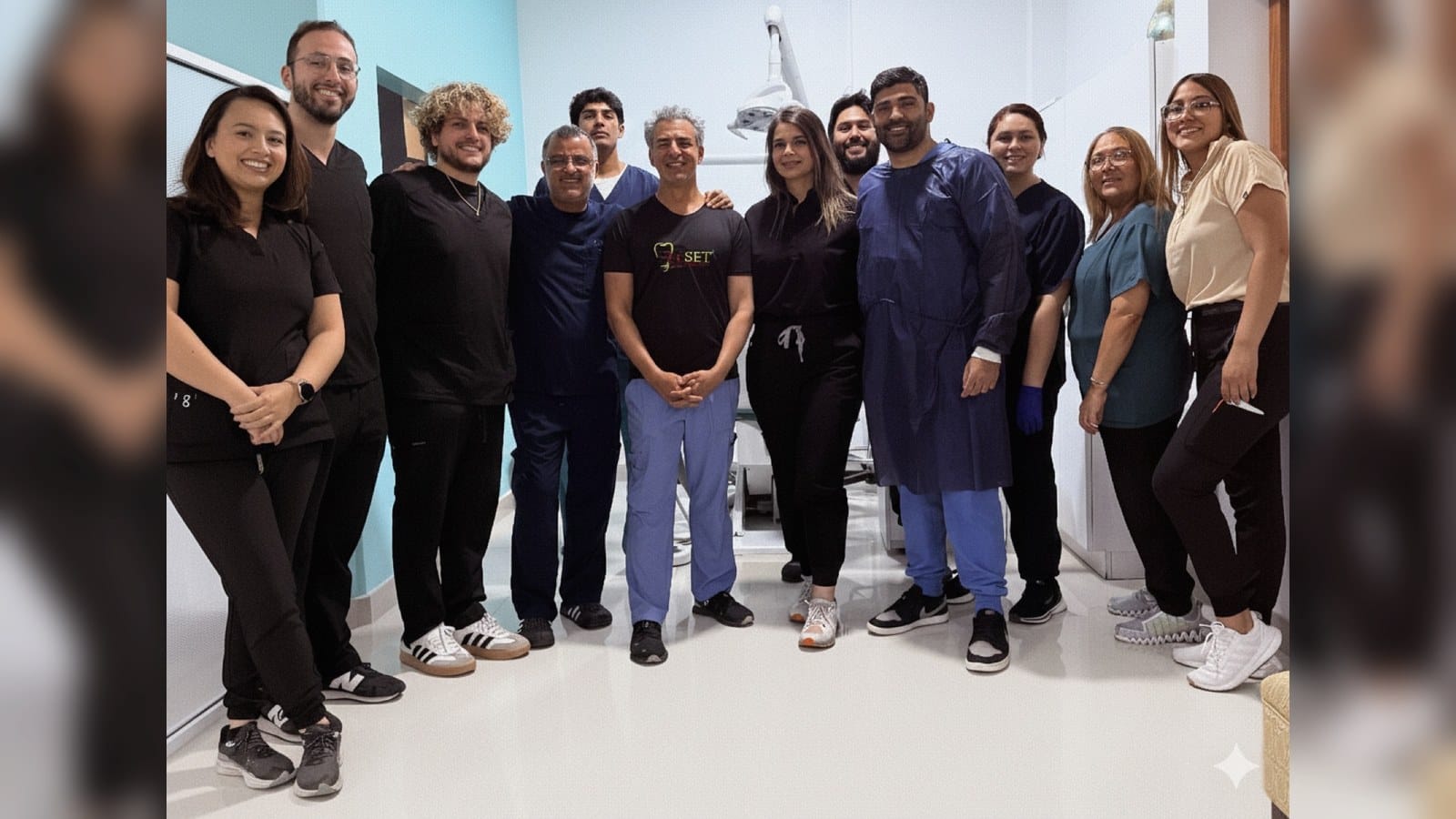
In the 3rdSET model, courses are capped at 5 hands-on dentists with 2 mentors, and both instructors mentor directly at chairside throughout surgical sessions. That is a high-supervision design choice, not an accident of marketing copy.
Case selection: the general dentist's competitive advantage
Specialists will always take complex surgery. General dentists win by selecting well: adequate bone, clear restorative plans, manageable soft tissue, and honest medical screening. An implant placement course should make you better at saying yes to the right cases and no to the wrong ones.
Look for teaching on:
- CBCT diagnosis tied to live patient visuals.
- Immediate versus delayed placement decision frameworks.
- When GBR changes sequencing.
- Sinus anatomy awareness and referral thresholds.
- Postoperative complication recognition.
That selection skill is also how solo and small-group practices keep implant cases in-house without overreaching. See best implant CE for dentists who want to keep cases in-house for the practice-economics angle.
One concrete example: 3rdSET as a placement-course specimen
The checklist above is vendor-neutral. Here is how one intensive live-patient program maps to it. Confirm current dates and remaining seats on the implant courses page; availability changes as cohorts fill.
Structure
Four-day live-patient surgical course, Wednesday through Saturday, in Tijuana via San Diego. Day 1 is travel, hotel check-in, and introductory lectures after meeting at San Diego International Airport around midday. Days 2–4 are live surgery roughly 9:00am to 8:00pm with lunch and evening group dinner.
Hands-on output and supervision
About 20–30 implants placed per hands-on participant. Five dentists and two mentors. Direct chairside mentorship from Dr. Farid Ebrahim, DDS, and Dr. Farshad Athari, DDS, throughout surgical sessions.
Seat types and CE
- Hands-On Surgeon: $16,000 all-inclusive, 36 CE credits, 5 seats.
- Observer: $3,000, 22 CE credits, up to 2 seats; observes planning and surgery, does not operate.
- Surgical assistant and companion options exist; companion terms are on the Terms page.
Credits are issued through MINEC America (AGD PACE, AGD Code 690 – Implants). Confirm board acceptance for your state.
Inclusions that affect total cost
Tuition covers implants and instruments, 4 nights hotel, scheduled meals on course days, materials and disposables, and round-trip ground transport from San Diego International Airport plus local transfers. Airfare to San Diego, extra beverages, and hotel incidentals are not included.
Curriculum map
Treatment planning and case selection; CBCT diagnosis; flap design and soft tissue releasing; surgical kit selection; material selection by scenario; GBR; bone densities; immediate versus delayed placement and immediate load; sinus lift; postoperative complication management.
Running the practice arithmetic before you enroll
Practice owners should run numbers before emotion:
- Tuition + travel + lodging extras + lost production for the days away.
- Expected implant cases retained in-house over the next 12 months if training works.
- Referral fees and patient leakage currently leaving the practice.
- Team time required for consults, imaging, surgery days, and restorative visits.
An implant placement course is a capital decision dressed as CE. If the arithmetic only works when you assume heroic case volume you cannot clinically support yet, revise the assumption. Start with appropriate cases and let volume grow with judgment.
Questions to ask before you pay tuition
- What is the per-participant implant placement range?
- What is the mentor-to-participant ratio on surgical days?
- What are the prerequisites, and how are they verified?
- How are cases assigned relative to skill level?
- What imaging and planning steps do participants complete before operating?
- What is included in tuition line by line?
- Who issues CE credits, under which accreditor, for which hours?
- What does patient follow-up look like after the cohort leaves?
- What first-month case profile do you recommend for a first-time placer?
- Can I speak with a graduate in a practice size similar to mine?
Write the answers. Compare two programs on the same sheet. The clearer program usually wins for reasons that have nothing to do with Instagram.
Red flags specific to "implant placement course" marketing
- Certificates emphasized more than personal surgical volume.
- "Unlimited implants" with no mentor-ratio disclosure.
- No restorative discussion until the closing hour.
- Faculty names that do not match who is present during surgery.
- Prerequisites so vague that any credit card qualifies.
- Pressure to enroll before numbers are provided in writing.
- CE claims without a named, verifiable issuing organization.
After the course: a transfer checklist for general dentists
Before you travel, prepare the landing:
- Identify candidate patients already in your charts who fit a conservative first-case profile.
- Align your assistant and front-desk scripts for implant consults.
- Confirm imaging protocols and lab communication for abutments and restorations.
- Decide which case types you will refer for the first six months — and stick to it.
- Block surgical time on your calendar for the month after you return.
Dentists who treat the course as the finish line rarely change their practice. Dentists who treat it as week zero of a placement project usually do.
How this article relates to live-patient training
An implant placement course can be lecture-heavy, model-based, cadaver-based, or live-patient. For most general dentists who want to start placing, the strongest placement courses expose them to live decision-making: bleeding, soft-tissue handling, patient management, drilling feedback, angulation correction, implant depth, and post-op instructions. That is why placement-course evaluation and live-patient evaluation overlap heavily.
For the live-surgery-specific lens — supervision models, patient safety questions, and what "live patient" should mean in a brochure — read live-patient implant training for general dentists. For the "why keep cases" business case, use best implant CE for private practice dentists.
Observer and team pathways
Not every stakeholder needs a surgical seat on the first trip. Observers can study mentoring style, pacing, and planning language. Surgical assistants can learn chairside workflow when a program offers that role. Companions may attend when declared in advance so hotel and meals can be arranged. Clarify rights and fees before travel. In the 3rdSET example, observer seats are published at $3,000 with 22 CE credits; assistant pricing comes from a coordinator; companion terms live on the Terms page.
Bottom line
A good implant placement course for general dentists should make your next clinical step clearer, not just your resume longer. It should give you supervised reps, a realistic case-selection framework, restorative awareness, verifiable CE credit, and enough mentorship to know what belongs in your practice and what still belongs with a specialist.
When you are ready to compare a live-patient placement option, review mentor ratio, included tuition, CE credits, seat types, and current dates on the hands-on dental implant CE course page, or book a call if you want fit and logistics clarified before you register.
Comparing tuition models without getting fooled by sticker price
Implant placement courses price themselves in different ways. Some quote a low tuition and charge separately for implants, kits, lodging, and meals. Others publish a higher all-inclusive number. Dentists who compare only the headline figure often pick the wrong program.
Build a simple total-cost worksheet for each shortlisted course:
- Base tuition for your seat type (hands-on versus observer).
- Required implant, abutment, membrane, or graft fees if not included.
- Instrument kit purchase or rental.
- Hotel nights and meals not covered by tuition.
- Airfare to the meeting city and local ground transport.
- Days of lost production, including hygiene and restorative days disrupted by your absence.
- Companion or assistant fees if your practice sends a second person.
Then divide total cost by your expected personal implant placements. Cost per supervised rep is a more honest comparison than cost per CE hour. A course that looks expensive on tuition and cheap on cost-per-rep is often the better capital decision.
In the 3rdSET all-inclusive example, the $16,000 hands-on tuition already bundles implants, instruments, materials, hotel, scheduled meals, and San Diego ground transport. That does not make it automatically the right choice for every dentist — it does make apples-to-apples comparison possible once you add airfare and lost production only.
What an implant placement course cannot do in four days
Even a strong intensive has limits. Naming those limits is part of being a serious buyer:
- It cannot replace years of restorative judgment you already have — and it should not pretend to.
- It cannot make every participant ready for full-arch immediate load on Monday.
- It cannot substitute for a practice system that diagnoses, presents, schedules, and follows implant patients.
- It cannot eliminate the need for selective referral on anatomy or medical complexity beyond your training.
- It cannot keep your skill sharp if you place nothing for six months after you return.
Buy the course for what it can deliver: supervised surgical volume, case-selection language, and a realistic on-ramp. Do not buy it as a personality transplant or a malpractice talisman.
Building internal referral criteria for your own practice
General dentists who place implants still refer — and should. The difference after training is that referral becomes criteria-based instead of fear-based. Draft a one-page internal guide after your course:
- Case types you will place in the first 90 days.
- Case types you will place only after additional mentoring or a second course.
- Case types you will always refer (for example, certain sinus, extensive grafting, or medically complex scenarios until you expand training).
- Which imaging findings automatically trigger a specialist conversation.
Share that guide with your associates and assistants. Consistency protects patients and makes your implant service line feel intentional rather than improvised.
Team readiness: assistants, front desk, and restorative sequencing
An implant placement course trains the dentist. The practice still has to deliver the visit. Before you enroll, ask whether your team can support:
- Consult appointments that include implant options without overselling.
- CBCT scheduling and radiograph review workflows.
- Surgical setup, sterile packaging, and implant inventory control.
- Post-op call protocols and complication escalation paths.
- Restorative sequencing with your lab for abutments and final prostheses.
Some dentists bring an assistant as a surgical assistant participant when the program offers that role. Others train the team at home after the dentist returns. Either path works if it is planned. Leaving team readiness to chance is how surgically capable dentists still refer everything out because the schedule cannot absorb implant surgery days.
How to use reviews and alumni calls without getting captured by them
Testimonials are useful and incomplete. When you read reviews or speak with alumni, ask operational questions:
- How many implants did you personally place?
- Were mentors present for your cases or mostly for lectures?
- What was your first in-office case after returning, and how soon did you place it?
- What surprised you that the brochure did not mention?
- Would you buy the same seat type again?
Be wary of reviews that only praise travel, dinners, or "energy." Be equally wary of critics who expected a specialty residency for the price of a four-day intensive. Calibrate feedback to the product category.
A sample scoring rubric you can copy
Give each criterion a 1–5 score, then weight what matters most for your practice:
- Per-participant surgical reps (weight high if your bottleneck is motor memory).
- Mentor ratio during surgery (weight high for beginners).
- Case-selection teaching quality.
- Restorative integration.
- CE accreditation clarity.
- Total cost of attendance.
- Logistical clarity (travel, lodging, schedule).
- Post-course transfer support.
Two programs with similar marketing often separate cleanly once scored. If you want a longer vendor-neutral rubric across weekend, continuum, and intensive formats, use 9 ways to evaluate dental implant CE programs as the companion worksheet.
When an observer seat is the smarter first purchase
Hands-on is not always step one. Consider an observer seat when:
- You want to evaluate teaching culture before committing surgical tuition.
- Your license, malpractice, or travel timeline makes observation the practical first move.
- A partner dentist is assessing whether the practice should invest in implant capacity together.
Observer value depends on access to planning sessions and live surgery — not on sitting in a hallway. Confirm that access in writing. In the 3rdSET example, observers pay $3,000, earn 22 CE credits, and observe surgeries and treatment planning without operating. Many dentists later return for a hands-on seat once they know the format fits.
Frequently asked questions
What should a general dentist look for in an implant placement course?
Look for honest prerequisites, a published per-participant implant placement count, a workable mentor-to-participant ratio during surgery, transparent case selection, restorative planning in the curriculum, verifiable CE accreditation, and a total cost of attendance you can calculate before you enroll.
Do I need prior implant experience to take an implant placement course?
Many placement courses welcome beginners when they require an active dental license and extraction competence. Beginner-friendly should still mean surgical fundamentals, not zero clinical foundation. In some intensive live-patient programs, roughly 60% of participants have never placed an implant before.
How many implants should I place in an implant placement course?
Ask for your personal placement range in writing. Single-digit personal counts introduce the workflow. Double-digit counts across multiple surgical days are where sequencing and soft-tissue handling begin to feel familiar. As one example, 3rdSET targets about 20–30 implants per hands-on participant over four days.
What mentor ratio is realistic for implant placement training?
Ratio during live surgery matters more than brochure faculty lists. Small cohorts with multiple mentors chairside allow real-time correction. A 2:5 mentor-to-clinician model is a concrete high-supervision example; large groups with one circulating instructor are a different product.
How much does an implant placement course for general dentists cost?
Costs vary by format. Compare total cost of attendance: tuition, travel, lodging, meals, implants, instruments, materials, and lost production. As one all-inclusive live-patient example, 3rdSET hands-on tuition is $16,000 with hotel, meals, implants, instruments, materials, and San Diego ground transport included; observer tuition is $3,000.
What CE credits should an implant placement course provide?
Prefer AGD PACE or ADA CERP recognition with an implant subject code such as AGD 690. Confirm the issuing organization and your board's acceptance rules. In the 3rdSET example, hands-on seats earn 36 CE credits and observer seats earn 22 CE credits through MINEC America (AGD PACE).
Where can I compare current implant placement course dates?
Seat availability changes. For 3rdSET, use the implant courses page for current dates, remaining seats, waitlists, and registration rather than relying on a static blog post.